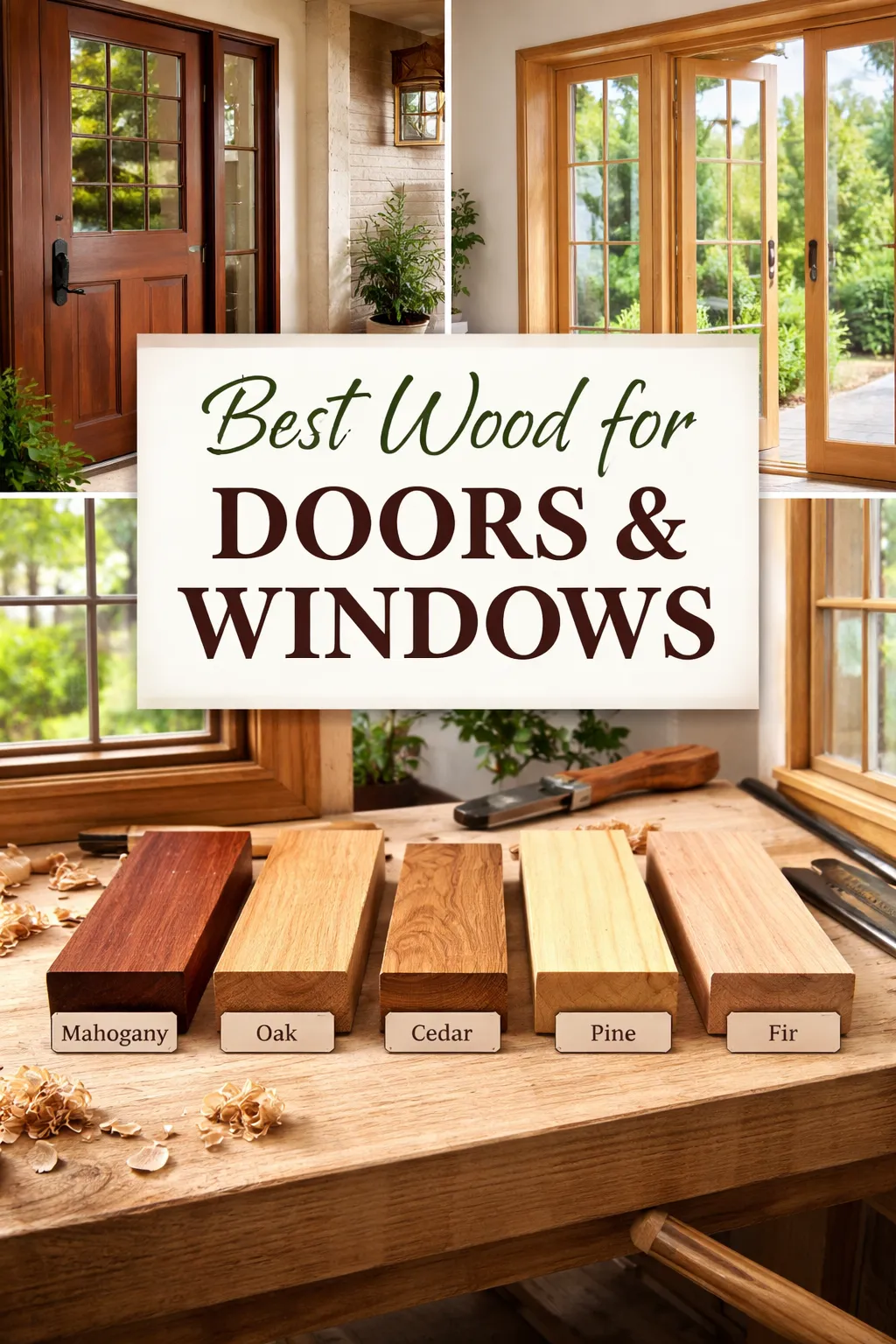
Best Wood for Doors and Windows: Builder’s Expert Guide
Choosing the right wood for doors and windows is one of the most important decisions in any residential or commercial building project. The type of wood you select directly impacts durability, insulation, maintenance requirements, and overall aesthetic appeal.
Builders and homeowners alike often focus on design first—but performance, climate compatibility, and longevity matter just as much. In this guide, we’ll break down the best types of wood for doors and windows, along with practical considerations to help you make the right choice.
Why Wood Is Still a Top Choice for Doors and Windows
Despite the rise of vinyl, aluminum, and composite materials, wood remains a premium option for several reasons:
Excellent natural insulation
Timeless appearance and warmth
Customization flexibility
Strong structural integrity
High resale value appeal
When properly treated and maintained, quality wood doors and windows can last decades.
What Makes Wood Suitable for Doors and Windows?
Not all wood species perform the same. The best wood for doors and windows typically offers:
Dimensional stability (resists warping and twisting)
Moisture resistance
Decay and insect resistance
Workability for custom shaping
Strength-to-weight ratio
Let’s explore the top-performing wood types builders rely on.
1. Mahogany
Best for: Premium entry doors & high-end window frames
Mahogany is widely considered one of the best woods for exterior doors and windows. It’s dense, durable, and naturally resistant to moisture and rot. Its fine grain also gives it a refined, elegant finish.
Pros:
Excellent durability
High resistance to warping
Beautiful, rich color
Consideration: Higher cost compared to other species.
2. Oak
Best for: Traditional homes & heavy-duty applications
Oak is known for its strength and distinctive grain pattern. It performs well structurally and adds a classic appearance to doors and windows.
Pros:
Extremely strong
Good impact resistance
Long lifespan
Consideration: Can be heavier and requires proper sealing for moisture protection.
3. Douglas Fir
Best for: Budget-conscious builds & painted finishes
Douglas Fir is one of the most common woods used in construction. It’s strong, stable, and cost-effective, making it popular for both doors and window frames.
Pros:
Affordable
Easy to paint
Good structural performance
Consideration: Not as naturally rot-resistant as hardwoods.
4. Cedar
Best for: Humid climates & outdoor exposure
Cedar is prized for its natural resistance to moisture, decay, and insects. It’s lightweight yet stable, making it ideal for windows and exterior doors in damp climates.
Pros:
Naturally weather-resistant
Lightweight
Pleasant aroma
Consideration: Softer than hardwoods, so it dents more easily.
5. Teak
Best for: High-moisture or coastal environments
Teak contains natural oils that make it highly resistant to water and decay. It’s frequently used in marine applications, which speaks to its durability.
Pros:
Exceptional weather resistance
Long lifespan
Low maintenance
Consideration: Premium price point.
6. Pine
Best for: Interior doors & cost-effective projects
Pine is widely available and easy to work with. It’s commonly used for interior doors and painted window frames.
Pros:
Affordable
Easy to customize
Readily available
Consideration: Requires proper treatment for exterior use.
Hardwood vs Softwood: Which Is Better?
When selecting wood for doors and windows, the hardwood vs softwood debate often arises.
Hardwoods (Mahogany, Oak, Teak)
More durable
Better for exterior use
Higher cost
Softwoods (Pine, Cedar, Fir)
More affordable
Easier to work with
Suitable for interior or treated exterior applications
The best option depends on your climate, budget, and maintenance expectations.
Factors to Consider Before Choosing Wood
1. Climate
Moisture, sun exposure, and temperature fluctuations significantly affect wood performance.
2. Maintenance Commitment
Wood requires sealing, staining, or painting to maintain durability.
3. Budget
Premium hardwoods last longer but come at a higher upfront cost.
4. Design Goals
Grain patterns and color tones vary widely between species.
Engineered Wood Options
Many modern builders use engineered wood cores with hardwood veneers. These options:
Reduce warping
Improve stability
Lower material cost
Maintain aesthetic appeal
Engineered solutions often offer the best balance between beauty and durability.
Final Thoughts
Selecting the right wood for doors and windows is about balancing performance, appearance, climate suitability, and budget. For premium exterior applications, hardwoods like mahogany and teak provide unmatched durability. For interior use or painted finishes, pine and Douglas fir remain reliable choices.
When properly installed and maintained, quality wood doors and windows not only enhance curb appeal but also improve insulation and long-term home value.
